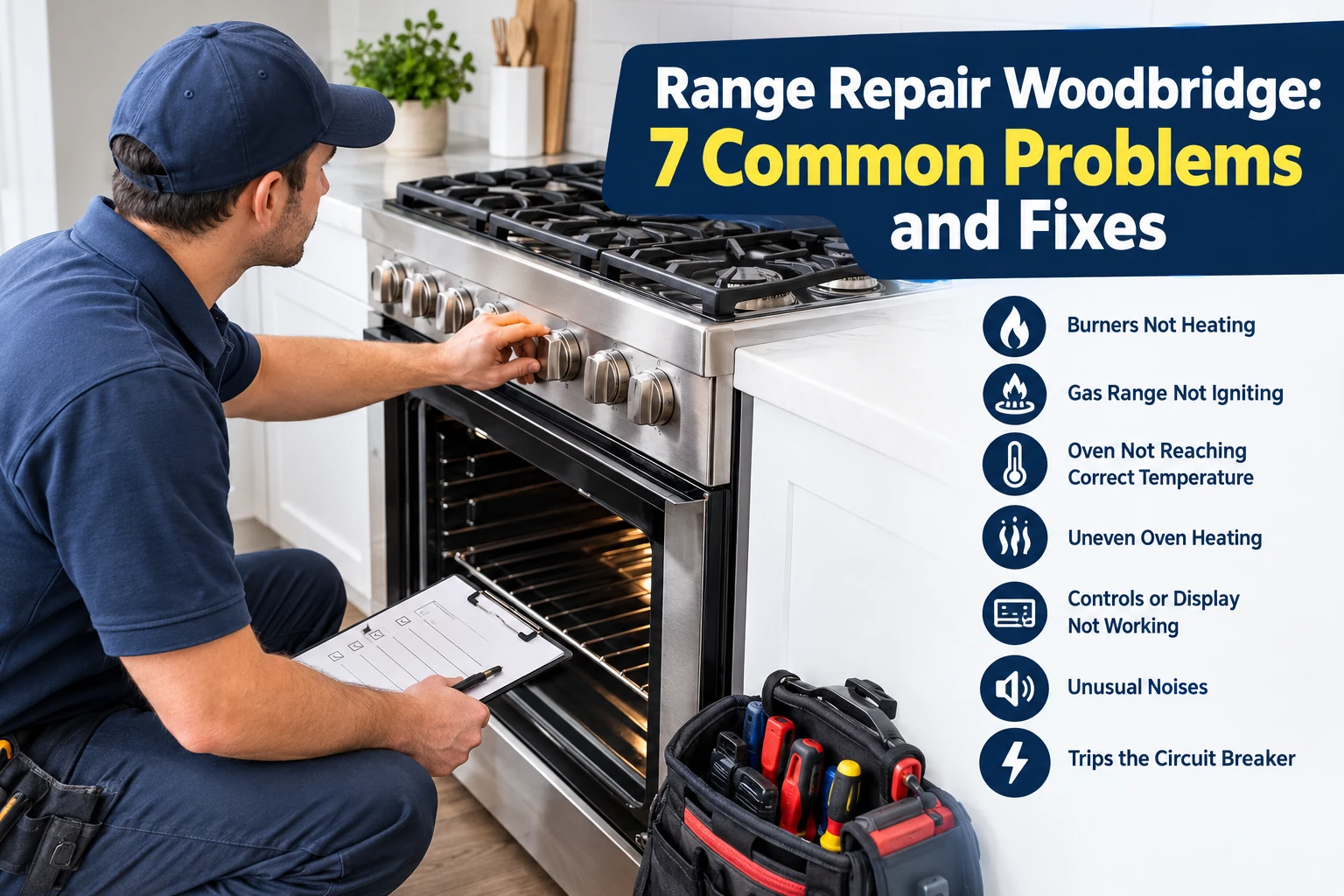

A kitchen range is an essential appliance that makes everyday cooking easier and more convenient. Whether you use a gas or electric range, regular use can eventually lead to performance issues. Problems such as burners that fail to heat, ovens that cook unevenly, or controls that stop responding can disrupt your daily routine. Understanding these issues can help homeowners identify simple solutions and recognize when professional assistance is necessary.
If you are experiencing problems with your kitchen appliance, learning about common range issues can help you determine the next steps. This guide explains seven frequent problems, basic troubleshooting tips, and when to consider professional range repair Woodbridge services.
1. Range Burner Is Not Heating Properly
A burner that does not heat properly can make cooking difficult. The cause often depends on whether you have a gas or electric range.
Possible causes:
- A damaged electric heating element.
- A loose or improperly positioned burner.
- A faulty burner switch.
- A blocked gas burner port.
Troubleshooting tips:
For electric ranges, turn off the appliance and allow the burner to cool before checking whether a removable coil is correctly seated. Never inspect electrical connections yourself. For gas ranges, check whether the burner cap is positioned correctly after cooling.
If the burner still does not work, a technician can inspect the relevant components safely.
2. Gas Range Is Not Igniting
A gas range that clicks without lighting may have an ignition problem. This issue can result from moisture, food residue, or a faulty igniter.
Common reasons include:
- Food particles blocking burner openings.
- Moisture around the ignition system.
- A misaligned burner cap.
- A damaged igniter.
What you can do:
- Turn off the burner and allow it to cool completely.
- Clean accessible burner components according to the manufacturer’s instructions.
- Ensure removable burner caps are properly positioned.
- Check whether the appliance is receiving power.
If you smell gas, do not attempt repairs or operate electrical switches. Leave the area and contact your gas utility or emergency services from a safe location. Persistent ignition problems should be evaluated by a qualified professional.
3. Oven Is Not Reaching the Correct Temperature
An oven that takes too long to heat or fails to reach the selected temperature can affect cooking results. Cakes may remain undercooked, while other meals may require additional cooking time.
Possible causes:
- A faulty temperature sensor.
- A damaged heating element.
- Incorrect temperature settings.
- A worn or damaged door gasket.
Troubleshooting steps:
- Verify that the correct cooking mode and temperature are selected.
- Avoid opening the oven door repeatedly during preheating.
- Check the visible door gasket for damage.
- Use an oven thermometer to compare the displayed setting with the actual temperature.
If the temperature remains inconsistent, professional diagnosis may be needed to identify a faulty sensor, element, or control component.
4. Range Oven Heats Unevenly
Uneven heating can cause food to cook faster on one side than the other. This problem may occur because of incorrect rack placement, overcrowding, or a malfunctioning heating component.
Try these simple solutions:
- Position the oven rack according to the recipe.
- Leave sufficient space around cookware for air circulation.
- Avoid covering vents or blocking airflow.
- Check whether the oven is set to the appropriate cooking mode.
If these adjustments do not improve cooking results, the appliance may have a failing heating element or temperature sensor. A technician can inspect these components and determine whether repair is necessary.
5. Range Controls or Display Are Not Working
Unresponsive buttons, a blank display, or incorrect settings can prevent you from using your range properly. Electrical interruptions or control board problems may contribute to these symptoms.
Possible causes:
- A temporary power interruption.
- An activated control lock.
- A tripped circuit breaker.
- A defective electronic control board.
Troubleshooting tips:
- Check the owner’s manual for control-lock instructions.
- Confirm that the appliance’s power supply has not been interrupted.
- If the breaker has tripped, do not repeatedly reset it.
- Look for error codes and consult the manufacturer’s guidance.
Never remove the control panel or handle internal wiring without proper training. If the display remains unresponsive, arrange a professional inspection.
6. Range Makes Unusual Noises
Some sounds are normal during appliance operation, but sudden or persistent noises may indicate a problem. Clicking, buzzing, rattling, or unusual popping sounds can have different causes.
Potential reasons include:
- Loose or incorrectly positioned components.
- Normal expansion and contraction of metal.
- A faulty ignition system.
- A malfunctioning cooling fan.
How to respond:
- Check that cookware and removable components are positioned correctly.
- Observe when the noise occurs, such as during ignition or preheating.
- Consult the manufacturer’s manual to identify normal operating sounds.
If noises become unusually loud, continue unexpectedly, or occur alongside burning smells or electrical problems, stop using the appliance when safe and seek professional assistance.
7. Range Trips the Circuit Breaker
An electric range that repeatedly trips its circuit breaker may have an electrical fault. Continuing to operate it without identifying the cause can create a safety risk.
Possible causes:
- Damaged wiring.
- A faulty heating element.
- A short circuit.
- An overloaded or malfunctioning electrical circuit.
Recommended actions:
- Stop using the range if the breaker repeatedly trips.
- Do not repeatedly reset the breaker.
- Avoid inspecting exposed wiring or internal electrical components.
- Contact a qualified appliance technician or electrician, depending on the suspected problem.
Professional diagnosis can help identify the source of the fault and determine the appropriate repair.
When to Seek Professional Range Repair
Basic troubleshooting can resolve some minor issues, but internal component failures require specialized knowledge and tools.
Consider professional assistance when:
- The appliance repeatedly fails to heat.
- Burners or ignition systems stop working.
- Temperature problems continue after basic adjustments.
- Error codes remain unresolved.
- Electrical faults or unusual operating symptoms appear.
Homeowners seeking range repair Woodbridge services should choose a qualified provider who can diagnose the problem, explain the recommended repair, and provide an estimate before work begins.
Conclusion
Kitchen range problems can affect cooking performance, household convenience, and appliance safety. From faulty burners and uneven oven temperatures to unresponsive controls and electrical issues, identifying the symptoms is the first step toward finding a suitable solution.
Homeowners can address simple issues by following manufacturer instructions, maintaining clean components, and checking basic settings. However, gas leaks, electrical faults, and suspected internal failures require professional attention. Timely diagnosis and regular maintenance can help restore reliable operation, prevent further damage, and extend the useful life of your kitchen range.